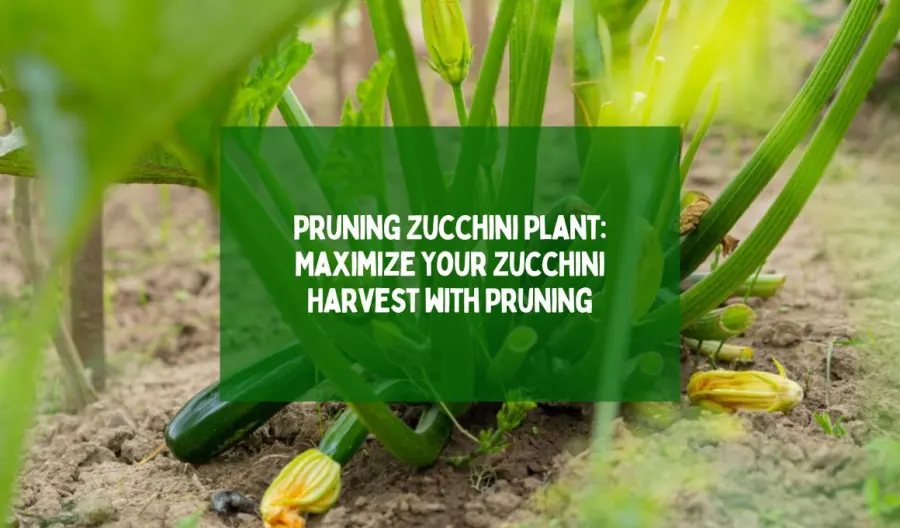
Zucchini plants are a popular vegetable among home gardeners due to their relatively easy growing process and delicious yield. However, as with any plant, zucchini plants require proper maintenance and care to thrive.
One important aspect of zucchini plant care is pruning. Pruning zucchini plants helps to improve their overall health. It also increases their yield and keeps them looking neat.
Should I prune zucchini plants?
Yes, you can. In this article, we'll cover everything you need to know about how to prune a zucchini plant.
Why Prune Zucchini Plants?
Pruning a zucchini plant helps to direct the plant's energy toward producing fruit. Zucchini plants are known to produce a lot of leaves and vines. If left unchecked, these can overtake your garden bed and reduce your yield.
By removing some of the leaves and stems, you'll also improve the air circulation around the plant, reducing the likelihood of diseases and pests.
Pruning is an essential aspect of zucchini plant care that can significantly impact the overall health and productivity of the plant.
Zucchini plants are known for their rapid growth and high yield, but without proper maintenance, they can become unruly and unproductive. In this part, we will explore why pruning is essential to a zucchini plant and how it can benefit your garden.
Increases yield
One of the primary reasons why pruning is important to a zucchini plant is that it increases the plant's yield. When zucchini plants grow, they develop numerous branches and leaves, which can compete for the plant's energy and nutrients.
Pruning the plant helps to direct the plant's resources towards fruit production, resulting in larger and more abundant harvests.
Improves plant health
Pruning zucchini plants can also help to improve the plant's overall health. When the plant is crowded with too many leaves and branches, trim zucchini plant leaves, It can create a humid environment that promotes fungal and bacterial diseases.
By removing some of the leaves and branches, you can improve air circulation, reducing the likelihood of disease and pest infestation.
Related Reading:
- When to Transplant Zucchini Seedlings? Let’s find out
- What is Zucchini Summer Squash and How to Plant Zucchini from Seeds?
Promotes better fruit quality
Pruning zucchini plants can also promote better fruit quality. When the plant is pruned, it produces larger and more flavorful fruits. This is because the plant's energy is directed toward the fruit rather than producing unnecessary foliage.
Additionally, pruning can help to reduce the incidence of misshapen or stunted fruit by ensuring that the plant has enough energy and nutrients to produce healthy fruits.
Prevents overcrowding
Pruning zucchini plants can also help to prevent overcrowding in the garden. Zucchini plants are known for their rapid growth and can easily take over a garden bed if left unchecked.
Can you trim zucchini plants?
Yes, it's important. Pruning helps to control the plant's growth and size, preventing it from overshadowing other plants in the garden and maximizing the available space.
Easy maintenance
Finally, pruning zucchini plants is an easy way to maintain the plant and keep it looking tidy. By regular pruning, you can control the plant's size and shape, making it easier to manage and harvest. Additionally, pruning makes it easier to inspect the plant for any signs of disease or pest infestation.
When to Prune Zucchini Plants?
Zucchini plants should be pruned when they are still young and before they start to produce fruit. This is usually around 3-4 weeks after planting. If you wait too long to prune, you risk damaging the plant and reducing your yield.
How to Prune Zucchini Plants?
Follow the following steps for how to prune a zucchini plant. if you want to prune your zucchini plants:
- Identify the main stem of the plant. This is the thick stem that runs up the center of the plant.
- Look for the first set of leaves that have five leaves each. These leaves are called the "true leaves." From this point on, any leaves that grow out from the main stem will have only three leaves each.
- Using a sharp pair of garden shears or scissors, cut off any leaves that grow from the main stem below the true leaves. These leaves are not necessary for the plant's growth and can be safely removed.
- As the plant grows, you'll notice that it starts to develop secondary branches that grow out from the main stem. These branches will also produce leaves and eventually flowers and fruit.
- To prevent the plant from becoming too bushy and to promote air circulation, you can remove some of the secondary branches. Look for branches that are growing in a direction that's crowding out other branches or that are growing too close to the ground.
- Be sure not to remove too many branches or leaves, as this can stunt the plant's growth and reduce your yield.
Related Reading:
- 5 Times You Should Prune Tomato Plants For Huge Harvests
- Cucumber Plant Care Tips: How to Keep Your Plant Healthy and Happy
Tips for Pruning Zucchini Plants
The following tips are helpful if want to prune your zucchini plant.
- Use clean, sharp shears or scissors to prevent damaging the plant.
- Avoid pruning in wet weather as this can increase the risk of disease.
- Don't remove more than one-third of the plant's foliage at any one time.
- Regularly check your zucchini plants for signs of disease or pests and remove any affected leaves or branches immediately.
- Consider using organic fertilizer or compost to help your zucchini plants grow and produce a higher yield.
Conclusion
In conclusion, pruning is an essential aspect of zucchini plant care that can significantly impact the plant's yield, health, and overall productivity. By regularly pruning your zucchini plants, you can increase your harvest. You can also improve fruit quality, prevent overcrowding, and ensure easy maintenance.
When to Start Pruning
Hold off on pruning zucchini until the plant is well established, usually once it has produced its first few fruits and has a solid framework of leaves, typically four to six weeks after planting. Pruning too early, before the plant has enough leaf surface to photosynthesize efficiently, can slow growth rather than help it. From that point on, plan to prune lightly every one to two weeks through the rest of the growing season rather than doing one heavy cut all at once.
What to Remove
Effective pruning comes down to a few specific targets rather than indiscriminate trimming:
- Lower leaves touching the soil: These are the most likely to develop fungal problems from soil contact and splash-back during watering. Remove them first.
- Yellowing or damaged leaves: Any leaf that's more than half yellow, chewed up by pests, or showing early signs of powdery mildew should come off, since it's contributing little to the plant's energy and can spread disease to healthy tissue.
- Suckers and side shoots: On vining varieties, small secondary shoots that emerge from the base can be removed to keep the plant's energy directed at the main stem and its fruit.
- Excess leaves shading developing fruit: A few large leaves directly over young fruit are fine, even helpful in hot climates, but a dense canopy blocking most of the light to the plant's center should be thinned.
As a rule of thumb, never remove more than a quarter to a third of a plant's total leaves in a single session. Zucchini leaves are the plant's solar panels, and cutting away too many at once will set back fruit production rather than boost it.
Tools and Technique
Use clean, sharp pruning shears or scissors rather than tearing leaves off by hand - a clean cut heals faster and leaves less of a wound for disease to enter. Cut the leaf stem close to the main stalk, but don't cut flush against it; leaving a small stub reduces the risk of damaging the main stem's tissue. Wipe your blades with rubbing alcohol between plants, particularly if you've noticed any sign of disease in the garden, since pruning tools are an easy way to spread pathogens from one plant to the next.
Best Time of Day to Prune
Prune in the morning on a dry day whenever possible. Cuts made in the morning have the rest of the day to callus over in the sun, while pruning in the evening leaves fresh wounds exposed to overnight moisture and cooler temperatures, both of which favor fungal growth. Avoid pruning right after rain or watering for the same reason - wet conditions around fresh cuts significantly raise the risk of disease taking hold.
Signs You're Overdoing It
If your zucchini plant starts producing smaller fruit, wilting during the heat of the day even with adequate water, or showing sunscald on fruit that used to be shaded, you've likely pruned too aggressively. Ease off and let the plant rebuild some leaf cover before your next round of pruning. A healthy pruning routine should leave the plant looking tidier and more open, not stripped bare.
Should You Prune Zucchini Flowers?
Removing a few male flowers for cooking, since they're edible and popular stuffed or fried, won't hurt your harvest, because a single plant produces far more male flowers than are needed for pollination. Avoid removing female flowers, which are easy to identify by the small bulge of immature fruit behind the petals - each one represents a zucchini in the making.
Bush vs. Vining Varieties
Not every zucchini plant needs the same pruning approach. Compact bush varieties, which are what most home gardeners grow, need relatively little intervention beyond removing lower and damaged leaves - their naturally contained growth habit doesn't send out the long runners that vining types do. If you're growing a vining or semi-vining variety, on the other hand, expect to prune more actively throughout the season to keep runners from sprawling across the whole bed and to direct growth toward a trellis or support structure.
Do You Need to Prune Zucchini at All?
No, pruning isn't strictly required for the plant to survive and fruit. Left alone, a healthy zucchini plant will still produce a harvest. Pruning is a management choice that pays off most in gardens with limited space, high humidity, or a history of fungal disease, where better air circulation and easier access to the plant make a real difference in yield and plant health over the course of the season.
How to Prune a Zucchini Plant Step by Step
Start with clean, sharp tools. Wipe your pruning shears with rubbing alcohol before you begin, and again if you move between plants, so you're not spreading disease through your garden. Look for leaves that are yellowing, touching the soil, or shaded out by the canopy above them; these are doing little for the plant and are the first ones to go.
Cut the leaf stem close to the main stalk, leaving a small stub rather than tearing it away, which can damage the main stem. Work from the bottom of the plant upward, and don't remove more than about a third of the plant's total foliage in a single session. Removing too much at once stresses the plant and can actually reduce fruit production instead of improving it, since the remaining leaves are what power photosynthesis and fruit development.
Prune in the morning when the plant is fully hydrated and cuts heal faster, and avoid pruning right after rain or heavy watering, since wet foliage spreads fungal spores more easily when you're handling the leaves.
Pruning Mistakes That Do More Harm Than Good
The most common mistake is over-pruning. Removing too many leaves at once, especially the larger leaves near the top that are still green and productive, cuts into the plant's ability to photosynthesize and can lower your total harvest rather than raise it. Only remove leaves that are clearly damaged, diseased, or blocking airflow to the point of causing problems.
Another mistake is confusing leaves with flowers or young fruit and accidentally cutting them off along with the foliage. Take a moment to look closely at what you're cutting, especially early in the season when small fruit can be easy to miss under larger leaves.
Can you prune zucchini too late in the season?
Pruning too close to the first frost doesn't help much, since the plant won't have enough time left to redirect that saved energy into new growth or fruit. In most climates, it's more useful to focus pruning efforts in mid-summer, when the plant still has weeks of productive growing time ahead of it.
What tools do you need to prune zucchini?
A pair of bypass pruning shears is really all you need for most zucchini plants; the scissor-style cutting action makes a cleaner cut than anvil-style shears, which tend to crush softer plant stems. For very thick or woody old stems near the base of an older plant, a small pruning saw makes the job easier. Whatever tool you use, keep a small bottle of rubbing alcohol or a disinfecting wipe in your garden caddy so you can wipe the blades clean between plants, especially if you're pruning anything showing signs of disease.